
Introduction
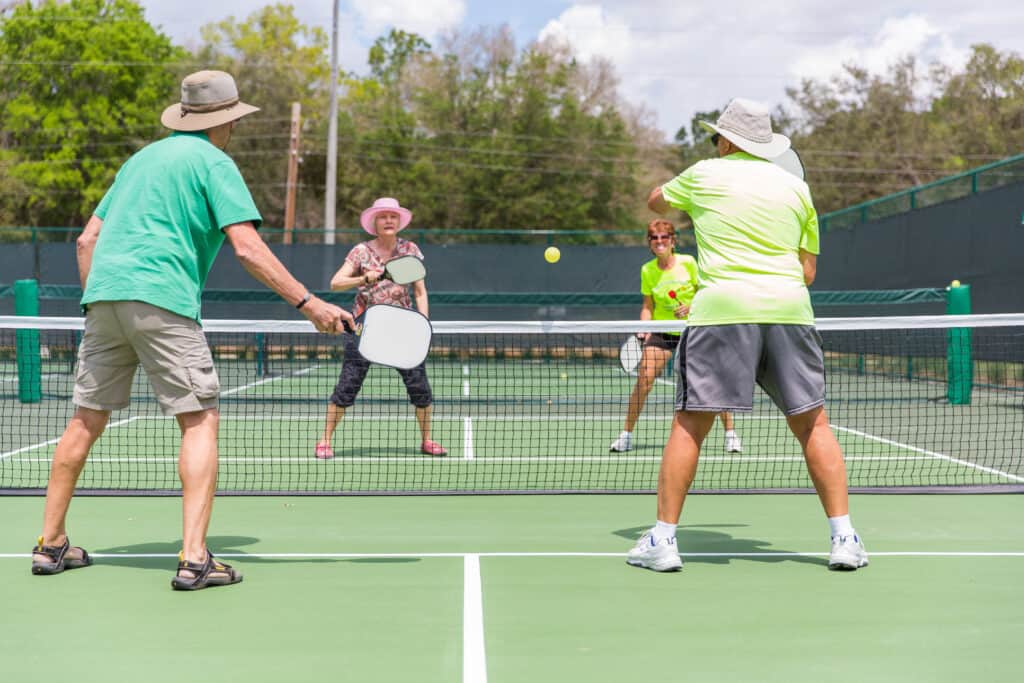
Pickleball is one of the fastest-growing sports in the United States, but growth has created a wide gap in understanding how the game is actually won.
Most players improve quickly at first. They learn how to serve, return, and rally. But after that early phase, many players plateau. They play frequently but see little improvement in results.
The reason is simple: they are relying on repetition instead of strategy.
Pickleball rewards players who understand positioning, shot selection, and point construction. At nearly every level, the player who makes better decisions will outperform the player who simply hits the ball harder.
This guide is designed to give you a complete, practical understanding of pickleball strategy. It focuses on the concepts that actually determine outcomes during real games.
If you are new to the game, you may want to review the fundamentals first in our Pickleball Beginner Guide and the complete Pickleball Rules Guide.
Download a copy of our “Pickleball Strategy and Shot Selection” guide.

How Pickleball Points Are Actually Won (Not Just Played)
Most beginner and intermediate players misunderstand how points are won in pickleball.
They believe points are won by:
- hitting harder
- attacking earlier
- trying to “end it” quickly
But in reality, most points are won through positioning and patience.

A typical rally is not a single moment—it’s a sequence:
- Serve (neutral start)
- Return (creates advantage)
- Third shot (attempt to recover or apply pressure)
- Movement to the kitchen
- Controlled exchange
- Attack opportunity
The biggest mistake players make is trying to skip steps.
They try to win points on:
- the third shot
- low balls
- rushed situations
Better players do something different:
- They build the point
- They wait for the right ball
- They attack only when the situation allows
If you understand this structure, your entire approach to the game changes.
The Core Principle of Pickleball Strategy
Nearly every rally in pickleball is influenced by one central objective: gaining control of the non-volley zone line.
The non-volley zone, commonly called the kitchen, is the most important area of the court. Players positioned at the kitchen line have a significant advantage because they can contact the ball earlier, reduce reaction time for their opponents, and control angles more effectively.
From the kitchen line, players can direct the ball downward or forward, while players farther back are often forced to hit upward. That difference alone creates a major strategic imbalance.
Because of this, most rallies follow a predictable structure. The returning team gains early positioning at the kitchen. The serving team must work forward through the transition zone. Once both teams reach the kitchen, the point becomes a controlled exchange until one side creates an attackable ball.
Understanding this pattern is the foundation of all effective pickleball strategy.
Serve Strategy: Setting Up the Point
The serve is often misunderstood. Many players believe the serve should be aggressive or used to win points outright. In reality, the primary goal of the serve is to start the point in a controlled and repeatable way.
A strong serve has three characteristics: consistency, depth, and intention.
Consistency is the most important factor. Because only the serving team can score in traditional pickleball scoring, a missed serve immediately gives away an opportunity. Eliminating missed serves is one of the fastest ways to improve results.
Depth is the second priority. A deep serve forces the returner to hit from farther back in the court, which makes it more difficult for them to advance quickly to the kitchen line. This slows down the rally and creates a more favorable situation for the serving team.
Placement adds another layer of strategy. Serving to a backhand, into the body, or toward the middle can create hesitation and reduce the quality of the return. However, placement should never come at the expense of consistency.
The serve does not need to be a weapon. It needs to be reliable and purposeful.
Return of Serve Strategy: Creating an Advantage
The return of serve is one of the most important shots in pickleball, particularly in doubles.
The returning team has a built-in advantage because of the two-bounce rule. After the serve, the return must bounce, which allows the returning team to move forward before the serving team can approach the kitchen.
To take full advantage of this rule, the return should be deep. A deep return keeps the serving team at the baseline and gives the returning team time to establish position at the kitchen line.
After hitting the return, the player should move forward quickly but under control. Arriving at the kitchen line in a balanced position is far more important than simply getting there as fast as possible.
A short return is one of the most common mistakes among developing players. It allows the serving team to move forward more easily and reduces the returning team’s positional advantage.
Third Shot Strategy: The Turning Point of the Rally
The third shot is one of the most strategically important moments in any rally. It determines whether the serving team remains on defense or begins to take control.
There are two primary options for the third shot: the drop and the drive.

The Third Shot Drop
The third shot drop is a soft shot designed to land in the kitchen. Its purpose is to force the opposing team to hit upward, preventing them from attacking.
This shot is most effective when the return of serve is deep and the opposing team is already positioned at the kitchen line. In these situations, attempting to hit a hard shot often results in an easy counterattack.
A common mistake is aiming the drop too low. Trying to barely clear the net leads to frequent errors. A better approach is to aim with enough height to ensure clearance while still keeping the ball unattackable.
The Third Shot Drive
The third shot drive is used when the ball is higher or shorter. It applies pressure and can force a weak response from the opponent.
However, the drive must be controlled. A hard shot that sits up at chest height often leads to a counterattack. A well-placed drive directed at an opponent’s feet or through the middle is far more effective.
Combining Both Approaches
At higher levels, players use both shots based on the situation. One common pattern is to drive the third shot and then drop the fifth shot. This sequence allows the player to create pressure first and then move forward behind a softer shot.
For a deeper breakdown, see your existing article on third shot decision-making and how to choose between a drop and a drive.
Kitchen Strategy: Controlling the Point
Once both teams reach the kitchen line, the nature of the rally changes significantly. Power becomes less important, and control becomes the deciding factor.
Dinking with Purpose
Dinking is not simply keeping the ball in play. It is a strategic exchange designed to create opportunities.
A good dink lands in the kitchen, stays low, and forces the opponent to hit upward. Over time, this pressure can lead to mistakes or create an attackable ball.
Many players lose points because they become impatient. Attempting to speed up the ball too early often results in errors or easy counterattacks.
Recognizing Attack Opportunities
The transition from control to offense is one of the most important skills in pickleball.
A ball becomes attackable when it is high enough to be hit forward or downward. This may occur when an opponent hits a weak dink, a high reset, or a ball that bounces above net height.
When attacking, the motion should remain compact. Large swings increase error rates and reduce reaction time for the next shot.
For a full breakdown of this phase of the game, see your article on Pickleball Kitchen Strategy.
Transition Zone Strategy: Surviving the Middle of the Court
The transition zone, located between the baseline and the kitchen line, is one of the most difficult areas of the court.
Players in this zone are often forced to hit balls at their feet while moving forward. This creates a challenging situation that requires discipline and control.
Moving Forward in Stages
One of the most common mistakes is rushing forward after a poor third shot. Movement toward the kitchen should be based on the quality of the previous shot.
If the shot is strong and forces a weak response, the player can advance. If the shot is high or easily attackable, the player should pause, regain balance, and prepare for defense.
The Reset Shot
The reset is the most important shot in the transition zone. It is a soft shot designed to neutralize the opponent’s attack and return the rally to a neutral position.
Executing a reset requires a soft grip, a stable paddle, and proper body positioning. The goal is not to win the point immediately but to regain control.
For more detail, see your existing guide on Pickleball Transition Zone Strategy.
Strategy for the Transition Zone
The transition zone is where many points are lost.
When you’re here:
- stay balanced
- expect fast balls
- use soft resets
DO NOT:
- swing big
- rush forward blindly
Your goal:
survive → reset → advance
Beginner vs Intermediate vs Advanced Strategy
Not all pickleball strategy is the same. What works at one level often fails at another.
Beginner Strategy (2.5–3.0)
At this level, the winning strategy is simple:
- Keep the ball in play
- Avoid attacking low balls
- Return deep
- Move toward the kitchen
You don’t need advanced shots—you need fewer mistakes.
Intermediate Strategy (3.0–3.5)
Now the game changes slightly.
Players begin to:
- recognize attackable balls
- understand positioning better
- sustain longer rallies
Strategy becomes:
- controlled aggression
- better shot selection
- more consistent movement to the kitchen
Advanced Strategy (4.0+)
At higher levels, the difference is decision-making.
Players:
- disguise shots
- manipulate positioning
- attack with precision
At this level:
Strategy > power
Positioning in Doubles
Positioning is one of the most overlooked aspects of pickleball strategy, yet it has a significant impact on outcomes.
Moving as a Team
In doubles, both players should move together whenever possible. If one player advances while the other remains back, gaps are created that opponents can exploit.
Maintaining proper spacing and adjusting based on the direction of the ball helps cover the court more effectively.
Controlling the Middle
The middle of the court is often the most effective target. Shots directed through the middle reduce angles and can create confusion between opponents.
Clear communication between partners is essential. Deciding who takes the middle and calling shots early prevents hesitation and errors.
For more on this, see the article on Pickleball Court Positioning.
Doubles Positioning Strategy (What Most Players Get Wrong)
Doubles pickleball is not just two players playing singles on the same court.
The winning doubles pickleball strategy is about movement and spacing together.
Key principles:
1. Move as a unit
- If one player moves forward, the other should follow
- Gaps between players get attacked immediately
2. Control the middle
- Most points are won through the middle
- Decide ahead of time who takes middle balls
3. Stay out of “no man’s land”
- The transition zone is where mistakes happen
- Move through it quickly or stabilize and reset
4. Communicate constantly
- “Mine”
- “Yours”
- “Out”
Silence causes errors.
Shot Selection: Making Better Decisions
One of the simplest and most effective rules in pickleball strategy is understanding when to attack and when to reset.
If the ball is above net height, it can often be attacked.
If the ball is below net height, it should usually be reset.
Attacking from a low position forces the ball upward, which creates an opportunity for the opponent to counterattack.
Patience is one of the most valuable skills in pickleball. Waiting for the right opportunity leads to higher-percentage outcomes and fewer errors.
Pickleball Shot Selection: A Simple Decision Framework
One of the biggest differences between average players and good players is shot selection.
Use this simple framework:
- Ball above net height → attack
- Ball below net height → reset
- Neutral ball → control and placement
When to Drive
Drive the ball when:
- the ball is high
- your opponent is out of position
- you can hit downward
Avoid driving when:
- you’re off balance
- the ball is low
- you’re under pressure
When to Drop
Drop the ball when:
- you need to move forward
- your opponent is at the kitchen
- you are hitting from deep court
When to Reset
Reset when:
- you are in trouble
- you’re in the transition zone
- your opponent is attacking
Most players lose points because they choose the wrong shot—not because they lack ability.
Adjusting to Opponents
Strategy should always adapt to the players on the other side of the net.
Against hard hitters, slowing the game down with resets and dinks can be highly effective. Against passive players, controlled aggression and consistent pressure can create opportunities.
For a detailed approach, see your article on How to Beat Bangers in Pickleball.
Common Strategic Mistakes
Several patterns appear consistently among developing players.
- Attacking balls that are too low
- Failing to move to the kitchen line
- Standing in the transition zone too long
- Using large swings in fast exchanges
- Lack of communication with a partner
Correcting these mistakes can lead to immediate improvement.
Strategy Mistakes That Cost You Games
Most players don’t lose because of bad shots—they lose because of bad decisions.
1. Attacking too early
Trying to win points before the opportunity exists.
Fix:
Wait for high balls
2. Staying at the baseline
This gives control to your opponent.
Fix:
Move forward after returns
3. Hitting low balls aggressively
This leads to pop-ups and errors.
Fix:
Reset instead
4. Poor partner positioning
Creates easy openings.
Fix:
Move together
5. Playing too fast
Rushing points leads to mistakes.
Fix:
Slow the game down when needed
What Good Pickleball Players Do Differently
If you watch better players, you’ll notice something surprising:
They don’t look rushed.
That’s because they:
- don’t attack bad balls
- stay balanced
- control the pace
- make fewer mistakes
They are not always hitting harder—they are making better decisions.
This is the biggest mindset shift in pickleball:
Winning is about control, not aggression.
How to Win More Games Without Getting Better (Immediately)
This is one of the most practical strategy concepts.
You can win more games right now if you:
- keep your serves in
- return deep
- stop attacking low balls
- move to the kitchen
- avoid unforced errors
That alone will beat most recreational players.
Situational Strategy: How to Adjust During a Match
Great players adjust. Average players don’t.
If opponents are aggressive:
- slow the game down
- use more resets
- avoid speed-ups
If opponents are passive:
- apply pressure
- attack high balls
- move forward quickly
If you’re losing points fast:
- reset your approach
- focus on consistency
- extend rallies
Strategy is not fixed—it adapts.
Frequently Asked Questions
What is the most important strategy in pickleball?
Controlling the kitchen line is the most important objective in most rallies.
Should I always use a third shot drop?
No. The decision should depend on the situation, including the height and depth of the return.
Why do advanced players seem more patient?
Because they understand that forcing shots too early leads to errors. Patience creates better opportunities.
Conclusion
Pickleball strategy is not about hitting harder or playing faster. It is about making better decisions.
Players who control the kitchen, choose high-percentage shots, and understand positioning will consistently outperform players who rely on power alone.
Improvement comes from awareness, discipline, and repetition of the right habits. By applying the principles in this guide, you can begin to play smarter, reduce errors, and win more points.
Final Thoughts on Pickleball Strategy
Pickleball strategy is not complicated—but it is specific.
The best players:
- build points
- make fewer mistakes
- control positioning
- choose the right shots
If you apply these concepts consistently, you will improve faster and win more games—without needing advanced techniques.
For deeper improvement, continue building your game through:
- Pickleball Drills
- Best Pickleball Equipment: A Guide
- Guide to Pickleball Rules
- Pickleball Serve Strategy
- Third Shot Strategy
- Pickleball Beginner Guide
