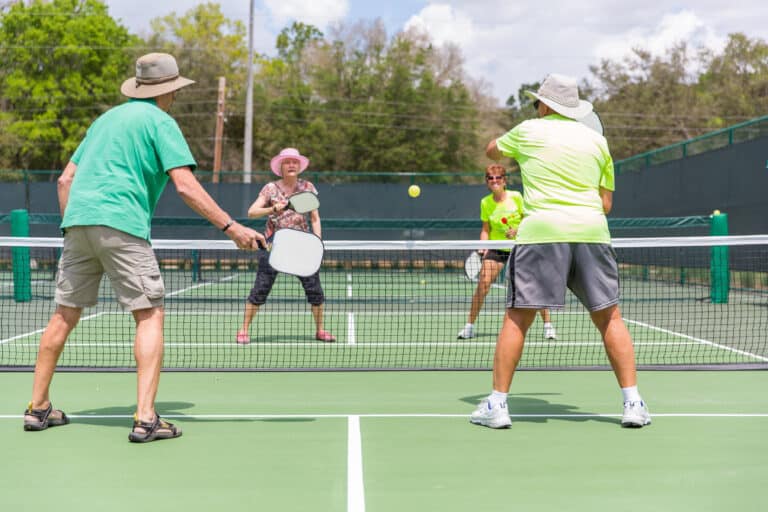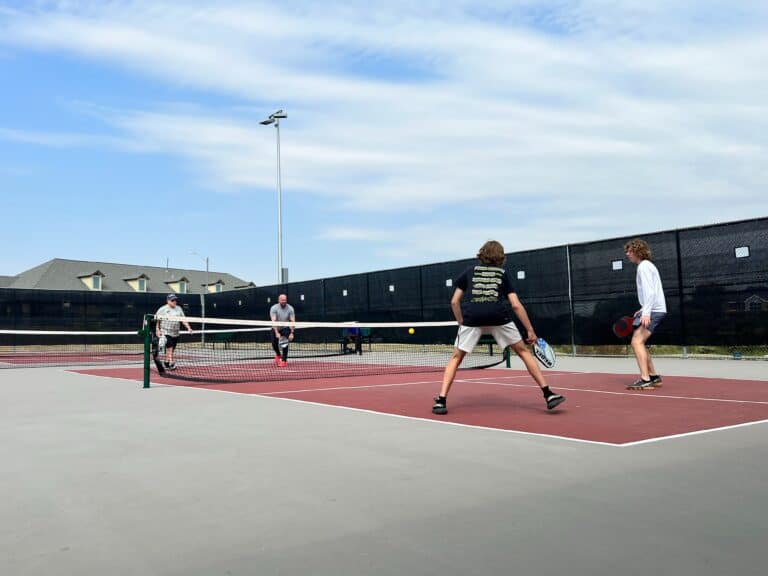
Pickleball Court Positioning: Where to Stand and Why It Matters
Pickleball is often described as a simple game—but where you stand on the court has a bigger impact on your success than how hard you hit the ball.
Many beginner and intermediate players focus heavily on strokes and technique. While those matter, positioning is what determines whether you’re in control of the point or constantly reacting.

If you’ve ever felt like:
- you’re always on defense
- your opponents seem to control the pace
- you’re getting passed or pulled out of position
…it’s likely a positioning issue.
This guide breaks down pickleball court positioning in a clear, practical way so you can understand where to stand, when to move, and how to control points more effectively.
If you’re newer to the game, you may also want to review this complete beginner guide to pickleball and the fundamentals outlined in the pickleball rules guide.
The Three Key Areas of the Court
Before diving into movement and strategy, you need to understand the three main zones on a pickleball court:
1. Baseline (Defensive Zone)
This is where points begin.
At the baseline:
- you are farther from the net
- you hit more upward shots
- you have less control over the rally
This is considered a defensive position, not where you want to stay.
2. Transition Zone (“No Man’s Land”)
This is the area between the baseline and the kitchen.
Why it’s dangerous:
- balls are often hit at your feet
- you’re forced into awkward half-volleys
- you have less time to react
Most beginner mistakes happen here.
3. Kitchen Line (Best Position)
The kitchen line (non-volley zone line) is the strongest position on the court.
At the kitchen:

- you take the ball earlier
- you control pace
- you apply pressure
This is where most points are won.
For a deeper strategic breakdown, see the pickleball strategy guide.
Why the Kitchen Line Is So Important
The kitchen line is not just another part of the court—it’s the goal position in most rallies.
Players at the kitchen:
- can hit down on balls
- reduce opponent reaction time
- control angles
- force errors
Players at the baseline:
- must hit upward
- have less control
- are reacting instead of dictating
The closer you are to the net (under control), the more control you have over the point.
The Biggest Beginner Positioning Mistake
The most common mistake beginners make is simple:
They don’t move forward after returning serve.
Instead, they:
- return the ball
- stay at the baseline
- give up control immediately
The correct approach:
- Return serve deep
- Move forward toward the kitchen
- Stop and split-step before your opponent hits
This is one of the fastest ways to improve your game.
How to Move Correctly on the Court
Positioning is not just about where you stand—it’s about how you move.
1. Move Forward in Stages
Do not sprint blindly to the kitchen.
Instead:
- hit your shot
- move forward a few steps
- pause as opponent hits
- repeat
This prevents you from getting caught off balance.
2. Stay Balanced
Most errors happen when players are:
- leaning forward
- moving while hitting
- off balance
Always try to:
- stop before contact
- keep your weight centered
- keep your paddle in front
3. Use the Split Step
A split step is a small hop just before your opponent hits the ball.
It allows you to:
- react faster
- stay balanced
- move in any direction
This is a small habit that makes a big difference.
Transition Zone Strategy (Where Points Are Lost)
The transition zone is the most difficult area to play from.
When you’re here:
- expect fast shots
- be ready for low balls
- avoid big swings
Your goal:
- reset the ball
- move forward
- get to the kitchen
What NOT to do:
- attack low balls
- rush forward blindly
- swing hard under pressure
This concept is closely tied to shot selection and is covered in the pickleball strategy guide.
Doubles Positioning: Playing as a Team
Most pickleball is played in doubles, and positioning becomes even more important.
1. Move Together
If one player moves forward, the other should too.
If you don’t:
- gaps open between players
- opponents exploit those gaps
2. Stay Side-by-Side
Avoid staggered positioning like:
- one player at baseline
- one at kitchen
That creates easy targets for your opponent.
3. Cover the Middle
Many balls go through the middle.
Decide:
- who takes middle shots
- communicate early
4. Communicate Constantly
Use simple calls:
- “mine”
- “yours”
- “out”
Communication prevents confusion and errors.
Singles Positioning: Different Strategy
Singles positioning is different because you cover the entire court.
Key differences:
- you stay slightly farther back
- you prioritize court coverage
- you rely more on movement than positioning
In singles:
- return and recover quickly
- stay centered
- adjust based on opponent position
Positioning and Shot Selection Work Together
Positioning and shot selection are connected.
Where you stand affects what shots you should hit.
Examples:
At the baseline:
- hit controlled shots
- avoid aggressive attacks
In transition:
- reset
- soften the ball
At the kitchen:
- control
- wait for attackable balls
This relationship is a core concept in the pickleball strategy guide.
Common Positioning Mistakes
Here are the biggest positioning mistakes beginners make:
- staying at the baseline
- rushing to the kitchen without control
- standing in transition zone too long
- poor partner spacing in doubles
- not adjusting during rallies
Fixing these will dramatically improve your results.
How Equipment Affects Movement
Positioning is also influenced by your gear.
Proper shoes help with:
- lateral movement
- balance
- quick stops
The wrong shoes can:
- slow you down
- increase risk of injury
If you’re unsure what to use, review the pickleball equipment guide.
Positioning Tips for Beginners
If you want a simple checklist, focus on this:
- move forward after returning serve
- avoid staying at the baseline
- don’t stop in the transition zone
- get to the kitchen under control
- stay balanced before every shot
These fundamentals will immediately improve your game.
External Resources
For additional guidance on court layout and positioning concepts:
These help reinforce the fundamentals of court structure and rules.
Final Thoughts
Pickleball is not just about hitting the ball—it’s about where you are on the court when you hit it.
The best players:
- move with purpose
- control positioning
- stay balanced
- make smart decisions
If you focus on positioning first, everything else becomes easier:
- your shots improve
- your reactions get faster
- your results get better
For continued improvement, revisit:
- Pickleball Beginner Guide
- Pickleball Strategy Guide
- Pickleball Rules Guide
- Pickleball Equipment Guide
Master positioning, and you’ll win more points without needing to hit harder.