Pickleball Mistakes Beginners Make: What They Are and How To Avoid Them
Pickleball Mistakes Beginners Make: What They Are and How To Avoid Them
Pickleball is one of the fastest-growing sports in the country—and for good reason. It’s fun, social, and relatively easy to pick up. Most beginners can get a rally going within their first session.
But here’s the reality: most beginners also make the same mistakes over and over, and those mistakes are what prevent them from improving.

If you’ve ever felt like you’re playing a lot but not getting better, losing to players who don’t seem more athletic than you, or unsure what you’re doing wrong, it’s likely not your effort—it’s your habits.
This guide breaks down the most common pickleball mistakes beginners make, explains why they happen, and shows you exactly how to fix them so you can improve faster and win more games.
If you’re brand new, start with the fundamentals in this complete beginner guide to pickleball and make sure you understand the basics of gameplay in the pickleball rules guide.
1. Trying to Hit Winners Too Early
The mistake:
Beginners often try to win the point too quickly—especially on the third shot or from difficult positions.
Why it happens:
- It feels natural to attack
- Players come from tennis or other sports
- There’s a misunderstanding of how points are built
Why it hurts your game:
Most balls early in a rally are not attackable. Trying to force winners leads to:
- balls into the net
- balls hit long
- easy counterattacks
How to fix it:
Focus on building the point instead of finishing it.
Use this simple rule:
- High ball → attack
- Low ball → reset
For a deeper breakdown of how rallies develop and when to attack, see our full guide to pickleball strategy and point construction.
2. Staying at the Baseline
The mistake:
After returning serve, many beginners stay near the baseline instead of moving forward.
Why it happens:
- Lack of awareness of positioning
- Fear of getting hit with the ball
- Slower reaction time
Why it hurts your game:
The kitchen line is the strongest position on the court. Staying back means:
- you’re always defending
- you hit more balls upward
- opponents control the rally
How to fix it:
After returning serve, move toward the kitchen line under control.
Learning where to stand—and when to move—is one of the biggest upgrades you can make. It’s covered in detail in our pickleball strategy guide.
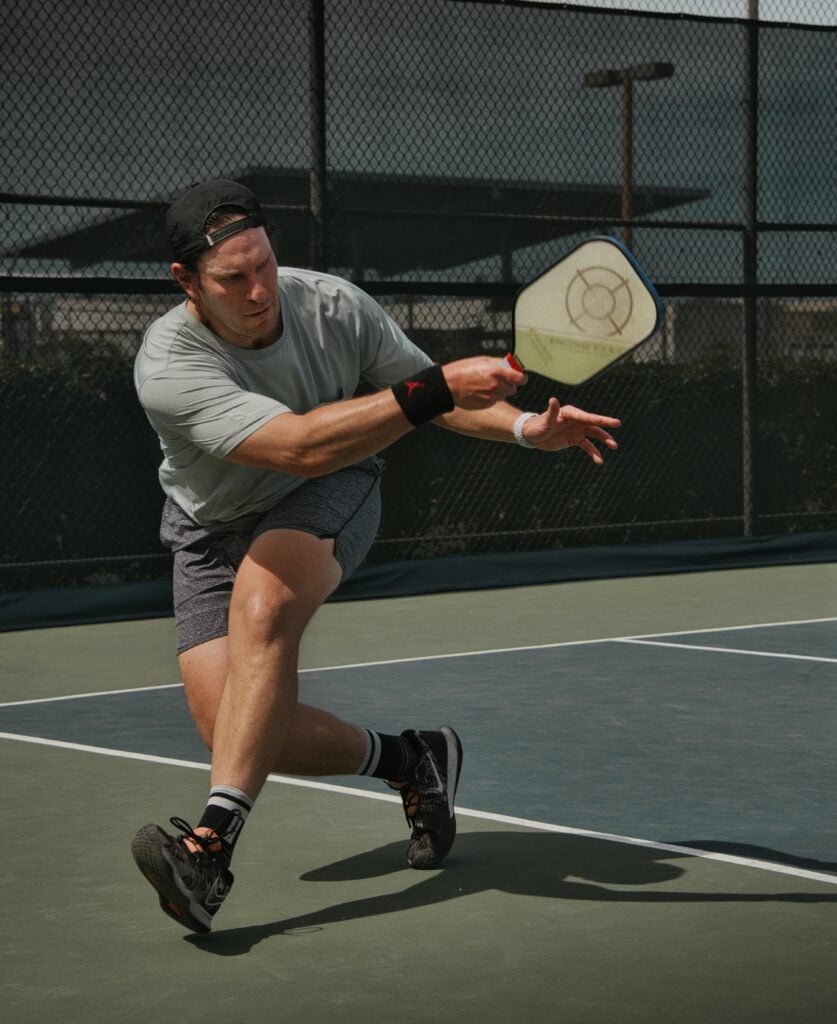
3. Attacking Low Balls
The mistake:
Beginners try to hit aggressive shots when the ball is below net height.
Why it happens:
- misunderstanding of shot selection
- desire to “be aggressive”
- lack of patience
Why it hurts your game:
When you hit hard from below the net, the ball must travel upward, which makes it easy for your opponent to attack.
How to fix it:
Reset the ball instead.
Hit a softer shot into the kitchen and wait for a better opportunity. This is a core decision-making concept that separates beginner and intermediate players.
4. Missing Too Many Serves
The mistake:
Beginners often try to hit their serves too hard or too precisely, leading to unnecessary errors.
Why it happens:
- trying to gain an advantage immediately
- overcomplicating the serve
- inconsistent mechanics
Why it hurts your game:
In traditional scoring, only the serving team can score. Missing a serve means you give away your scoring opportunity.
How to fix it:
Focus on:
- consistency first
- depth second
A reliable serve is far more valuable than a powerful one. If you need a refresher on proper serve mechanics and rules, review the official guidelines in this pickleball rules overview.
5. Poor Shot Selection
The mistake:
Hitting the wrong shot for the situation.
Why it happens:
- reacting instead of thinking
- lack of experience
- not recognizing ball height and positioning
Why it hurts your game:
Even with good mechanics, bad decisions lead to errors.
How to fix it:
Use a simple framework:
- High ball → attack
- Neutral ball → control
- Low ball → reset
If you’re unsure, the safer shot is usually the better one. This concept is reinforced throughout our beginner training content and strategy-focused articles.
6. Ignoring the Kitchen Strategy
The mistake:
Beginners either avoid the kitchen entirely or misuse it.

Why it happens:
- misunderstanding the rules
- confusion about when you can enter
- fear of making a mistake
Why it hurts your game:
The kitchen is where points are controlled. If you don’t use it properly, you lose positioning and give your opponent an advantage.
How to fix it:
Understand that you can stand in the kitchen—you just can’t volley from it.
If you’re unsure about kitchen rules or positioning, revisit a full explanation of gameplay rules in the pickleball rules guide.
7. Not Communicating in Doubles
The mistake:
In doubles, beginners often stay silent during points.
Why it happens:
- lack of experience
- uncertainty about roles
- hesitation
Why it hurts your game:
Without communication:
- balls drop between players
- confusion leads to errors
- opportunities are missed
How to fix it:
Use simple, consistent communication:
- “mine”
- “yours”
- “out”
Good doubles play is about teamwork, not just individual shots.
8. Using the Wrong Equipment
The mistake:
Beginners sometimes use gear that doesn’t match their level.
Why it happens:
- choosing based on price alone
- using borrowed or random equipment
- assuming all paddles are the same
Why it hurts your game:
The wrong equipment can reduce control, cause discomfort, and slow your improvement.
How to fix it:
Choose:
- a control-oriented paddle
- proper court shoes
- the correct ball (indoor vs outdoor)
If you’re unsure what to buy, this pickleball equipment guide walks through everything beginners should consider.
9. Playing Without Practicing
The mistake:
Only playing games without working on specific skills.
Why it happens:
- games are more fun
- lack of structure
- not knowing what to practice
Why it hurts your game:
Games reinforce habits—but they don’t always fix them.
How to fix it:
Add short, focused practice sessions:
- serve practice
- return drills
- dinking
Even 15–20 minutes of targeted practice can make a noticeable difference.
10. Playing Too Fast
The mistake:
Rushing points and trying to speed everything up.
Why it happens:
- excitement
- impatience
- misunderstanding of tempo
Why it hurts your game:
Faster is not always better. Playing too fast leads to more errors and poor decisions.
How to fix it:
Slow the game down when needed:
- use softer shots
- reset under pressure
- stay patient
This is one of the biggest mindset shifts for beginners learning how to control rallies.
Resources to Improve Faster
If you want to eliminate these mistakes and improve your game quickly, these resources will help:
- Pickleball Beginner Guide
- Pickleball Strategy Guide
- Pickleball Rules Guide
- Pickleball Equipment Guide
For additional authoritative information, you can also review:
Pickleball Beginner Mistakes FAQ
What is the biggest mistake beginners make in pickleball?
Trying to win points too early. Most beginners should focus on consistency instead of aggressive shots.
How do I improve faster at pickleball?
Reduce unforced errors, return deep, move to the kitchen, and practice specific skills instead of only playing games.
Should beginners play aggressively?
Not usually. Controlled, consistent play is more effective at the beginner level.
Why do I keep losing to players who don’t hit hard?
Because pickleball is more about positioning and decision-making than power.
What should I focus on first?
Serve consistency, return depth, movement to the kitchen, and basic shot selection.
Final Thoughts
Every beginner makes mistakes—that’s part of learning the game.
The difference between players who improve quickly and those who don’t comes down to awareness and adjustment.
If you stop attacking low balls, move forward more effectively, make smarter decisions, and reduce unforced errors, you will improve faster than most players around you.
Stick to the fundamentals, stay patient, and keep learning. The game becomes much more enjoyable—and much more competitive—when you understand how to play it the right way.